
Google Supplemental or Related: What It Is and How to Avoid Your Pages Ending Up in It



Google supplemental is an additional index in the search system, where sections of certain projects often end up. For a person conducting a search on the Internet, they become invisible. As a result, users do not receive all possible results, and the site itself progresses very slowly.
Supplemental results or “Google Supplemental”
Google always strives to offer its users only the best results – those that bring maximum utility and contain the necessary information. For the search engine, all pages are divided into two parts – primary and supplemental. If a certain page is evaluated by the search engine as having low informational value, it takes its place in the supplemental index of Google’s database.
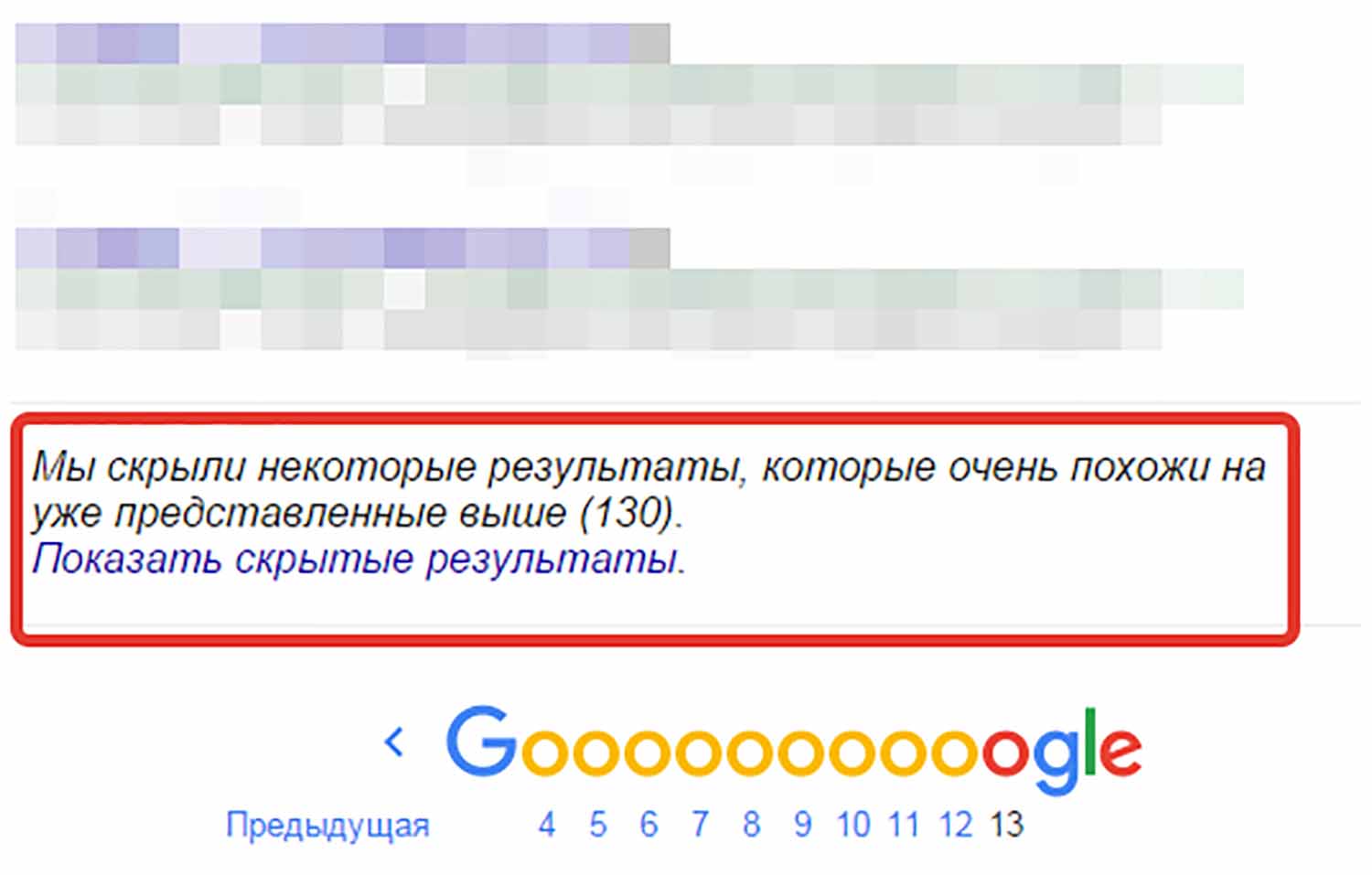
Why “Google’s simply”? Specialists speaking in Russian find it easier and more comfortable to refer to it as “supplemental”, rather than “supplemental”, so they coined this slang for themselves. Such simplification of terms is a common practice for SEO specialists. Thus, when the search system finds web resources occupying a spot in the supplemental index, the user sees a phrase indicating that certain results were hidden in view of their similarity to existing ones.
Why do some resources get shifted to the supplemental index?
The reasons why certain pages are hidden from the user are quite numerous. Here are some of them:
- Non-unique text. Google has a built-in filter known as Panda, whose task is to check the uniqueness of content. Additionally, it takes into account duplicates found within the limits of a single site. It recommends all pages containing duplicated material to be blocked from the indexing process in the robots.txt file.
- Issues with site structure. Any site should have a logical structure. If there are problems with this, the page will be immediately sent to the supplemental index.
- Links to prohibited resources. This is the situation when a site contains links to those web resources that are prohibited by Google.
- Small weight of the web resource. Such a problem may arise due to incorrect linking within the page itself.
- Presence of dangerous links. Links placed on the site should only contain verified and permitted pages. If a linking profile has low quality, there is practically no trust in such a resource.
- Low informational value of the page. Such a verdict may be issued if the text is very short, has a high percentage of duplication, or if an automatic translation was used.
- Strange thematic focus of the page. This is the situation in which a separate page on the site contains information that has cardinal differences from the theme of the entire site.
- Absence of title and description. If these meta tags are missing altogether or are non-unique, the page has every chance of being sent to supplemental results.
How to understand that a web resource has landed in Google’s simply?
To establish that a web resource is in the supplemental index, you need to use the operator site. It is applied along with the site URL.
In the selected project, a specific number of pages will be indexed. At the end of the list of all results, the user will see that some percentage of them were hidden.
Why landing in supplemental results negatively affects the site’s popularity
Landing in the supplemental index leads to the following:
The page remains hidden from users and, therefore, it will not have visitors. There is only one exception to this rule – if the main index cannot provide the requested results for the user, the search engine reflects that there are additional ones.
Even if keys from a semantic core are added to the web site, they will remain unnoticed and will not be able to ensure user visits.
A resource containing an excessive number of pages in the simply index will be far from being in the top lines of the search output. Therefore, its traffic will significantly decline. For the project to advance and provide results, it is necessary to remove pages from the supplemental index.
How to transfer web resources from the supplemental index to the main one?
In order for pages to disappear from Google’s supplemental, certain important actions must be taken:
Listen to Google’s recommendations and redo the content – edit the text, ensure its uniqueness up to 100%, provide a good structure, informativeness, and utility. Additionally, it is particularly important to ensure that the title and description are literate and unique.
Ensure a coherent site structure with 3-4 levels of nesting.
Apply the “rel=canonical” tag so that search engines can find the required pages.
In the robots.txt document, hide from indexing those pages that contain technical information or data that do not represent value for the user (pages with product sorting or system files).
Let’s summarize:
- Today we explored what represents the Google supplemental. All pages directed into “simply” will be located after the primary ones, and the user can see them if they want to familiarize themselves with the additional results.
- If a site’s pages are in Google supplemental, they will be hidden from the users, and its promotion will become practically impossible.
- In order for the pages to be moved from the supplemental index to the main one, their content needs to be improved. It is crucial to ensure a good uniqueness of the content, its quality, not to have dubious links on the site, and overall to comply with Google’s guidelines.