
How to Properly Build Backlinks



Content:
How to Build Your Link Profile Correctly
Development of Link Ranking
Google – a Search Engine with Advanced Ranking Algorithms
Google PageRank
Link Exchanges and Aggregators
Google Penguin
Yandex – An Initial Shock for the SEO Community
Impact of Links on Ranking
Skyscraper Technique Strategy
How to Write Quality Content
How to Create a Technical Task for Copywriters
The Phenomenon of Link Explosion and How to Avoid It
Fixed Budget
The Correct Website Promotion Strategy
Option #1.
Option #2.
Option #3.
Building Up Backlinks for Your Website Correctly
Natural Internet Links
Purchased Internet Links
How to Build Up Link Profile to Improve Site Ranking
Types of Links
Typical Plans for Working with Backlinks
Effect
For some reason, it has become accepted to believe that link promotion does not bring any effect, and one should follow more effective SEO methods that do not require backlinks. Let’s try to delve into this today and understand if it is truly worth completely abandoning link building and turning to other methods?
How Link Ranking Development Progressed
To understand this issue, it is worth recalling the history of the development of link ranking mechanisms and understanding exactly what goals it pursues.
The first Russian-language search engines we had were Aport and Rambler, while the English-speaking world used Alta Vista and Yahoo. Since there was active development of the internet space at that time, there was a need for more good search engines.
Google – a search engine with advanced ranking algorithms

The quality of search results at that time was weak. Against this backdrop, Google made a real breakthrough by introducing the PageRank algorithm, which assigned a ranking to websites based on the links present on them.
Google PageRank
This new approach ensured quality search output and eventually secured the first place in the global search market. Initially, this algorithm had many deficiencies in analyzing link mass, which worked in favor of SEO specialists since increasing the ranking of sites, as well as traffic and (consequently) sales, required the creation of a large number of active links.
Soon, programs like Allsubmitter and Xrumer were developed, helping to ensure the mass placement of links on various directories, which were often irrelevant or even dead. Thanks to these programs, promoting any site seemed simple and very promising. As a result, there was a significant deterioration in the quality of search results, and Google had to resort to serious measures.
Link exchanges and aggregators
Evaluating links based on their quality parameters became the next logical step. As a result, mass submission of websites to all available directories became obsolete, requiring completely different and relevant solutions. With the emergence of link exchanges, easy and straightforward website promotion became possible again. However, problems arose here as well due to the lack of quality and practical filters for link selection on these exchanges. Among all the exchanges, only one took the lead – Sape. It developed and successfully implemented the Sape filter (also known as Vinka) for the Mozilla Firefox browser. This filter effectively screened out poor-quality sites and allowed users to select only the most suitable links based on quality and cost.
At the same time, link aggregators such as Rookee, Seopult, and Webeffector appeared, which were based on automated systems for selecting and purchasing link mass. Users really liked this – you set the necessary parameters and easily purchase high-quality links.
All seemed well with the problem apparently solved, but the cost of promotions increased. And here, Google once again did not stand still, introducing the new anti-spam algorithm “Penguin” in 2012.
Google Penguin
Now, life became significantly more complicated for sites engaged in link spam, as the search results changed dramatically. Natural anchors were now determined by specific parameters that were unique to each existing theme.
Exact anchors matched the required promotion keyword or its full form, while the inexact ones did not have such parameters.
Nothing is perfect, so even normal sites fell under the filter. In response, Google introduced a sort of rehabilitation – if a link wasn’t removed, it was necessary to enter the console and add it to the special disavow section.
Yandex – an initial shock for the SEO community
In December 2013, Yandex literally shocked the entire SEO community by announcing a complete rejection of link ranking. But soon everything fell into place with the introduction of the ‘Minusinsk’ filter. It was very similar in operation to the first version of Google Penguin. Only those internet resources suffered in the Yandex ranking that had less than 20% non-anchor links.
Various updates to Google and Yandex filters can be reviewed endlessly. However, the final point is the same – to fight only for quality links. This will continue for a long time, so we advise everyone to stick to a strategy focused on quality rather than quantity.
Since the quality of links is determined by many parameters and manually reviewing them takes a very long time, it is worth resorting to such paid automated services as Checktrust or the batch analysis of Serpstat, Ahrefs. Although they cannot determine topics and regionality, testing these resources would not be superfluous.
So, the myths about abandoning link building have been dispelled. Now it’s worth answering the question of the influence of links compared to other ranking methods.
How links specifically affect your site’s ranking
You won’t get a definitive answer to this question from anyone because it entirely depends on the specific analysis of search engine results.
Speaking of Google, it has three major interconnected algorithms:
- Algorithm #1. The very content of your web resource.
- Algorithm #2. The links themselves.
- Algorithm #3. The impact of RankBrain (artificial intelligence).
As for Yandex, it uses as many as 800 algorithms (50 of which are link-based), but no one can determine the proportion of these algorithms. What is absolutely known is that for Yandex site promotion, both links and their content are important, because the ‘Minusinsk’ filter is used. Meanwhile, artificial intelligence is not utilized – only manual adjustments are made by individual Yandex system specialists – assessors.
Undoubtedly, links for ranking are an essential algorithm, so it’s worth moving on to the questions of their growth. Therefore, let’s consider the principles of the Skyscraper technique – the most popular Western strategy for site promotion.
Skyscraper Technique Strategy
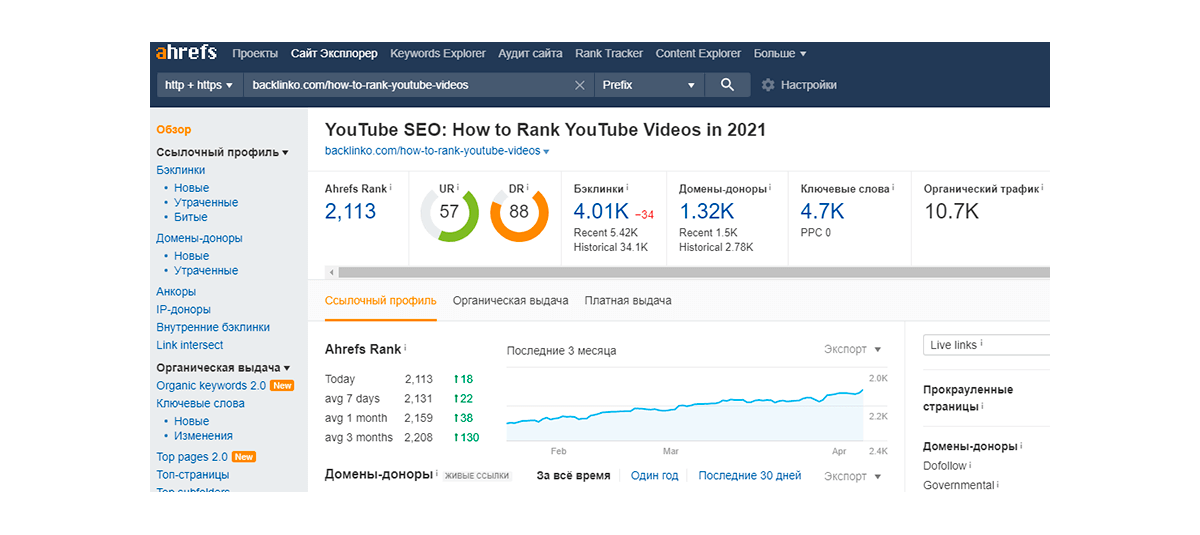
Who hasn’t admired this strategy by Brian Dean in Western SEO blogs? So who is Brian Dean and what is the essence of his strategy?
Brian Dean started a personal SEO blog about promotion, which has only 542 pages, yet is one of the leaders of the global internet.
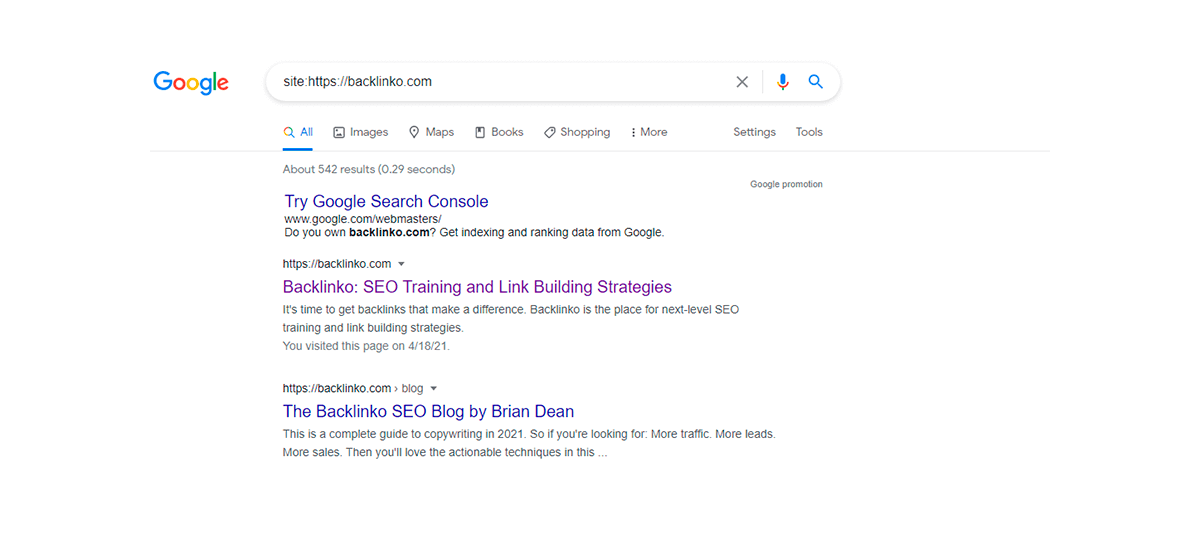
New blog topics are released no more than once a month, but they are high-quality content, written thoughtfully, in simple language, and accessible to almost everyone. And believe me, such informative materials are not created quickly.
The Skyscraper technique strategy is the main secret to the blogger’s success.
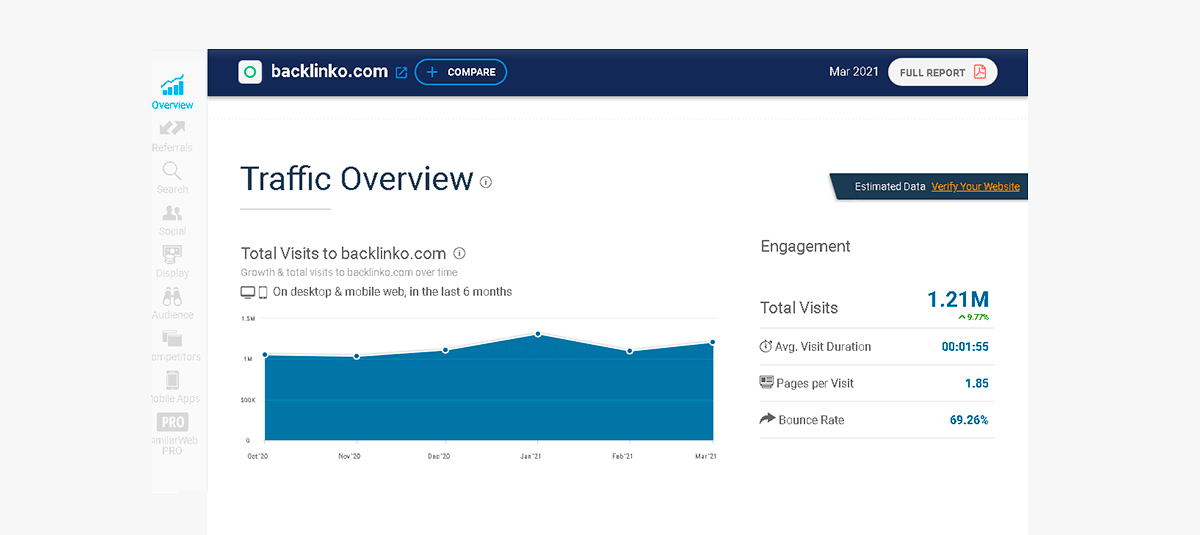
It consists of just 3 steps:
- Analyze the content of competitor websites that are in the TOP-10 of search engines and identify its shortcomings.
- Prepare your own higher quality content, where the shortcomings of competitors’ articles become its main advantages.
- Promote this high-quality content on the internet.
How to Write Really High-Quality Text

Just follow these 8 guidelines:
- The introduction to the article should have a brief but detailed description of the entire material, since it is at the introduction that many stop reading your article.
- Sentences in the article should be as short but concise as possible. If a sentence turns out long, try to break it into a couple of shorter ones.
- Each paragraph should contain no more than 5 lines.
- Do not forget to insert a line space between each paragraph.
- There should be no complex terms in the text.
- Reread the texts for errors, various inaccuracies, word omissions, as well as incoherent phrases. Let each finished text be read and evaluated by others.
- The structure of any text should always be consistent, consisting of an introduction, the main body, and conclusions.
- To ensure the content is read to the very end, conclusions and necessary recommendations should always be found there.
Besides interesting text, the content should always include other elements to enhance its readability and the perception of the information presented within.
For this purpose, use:
- Visualization (charts and infographics, thematic images or photos, tables, and videos).
- Appropriate lists, reviews, and ratings
- Results from thematic studies.
Try not to ignore video, as video traffic in the past year (2020) attracted almost 85% of buyers.
Consequently, when writing quality content, you have a high chance of gaining free backlinks.
How to competently create a task specification for copywriters?
If you can manage the text and its formatting independently, then you need to know how to create competent task specifications for copywriters and designers, and (if necessary) for layout designers and programmers. After all, your future unique content and its chances of reaching the TOP search results will depend on them.
The most crucial role here is played by copywriters, as the success of your unique content depends directly on the quality of the articles they write. There are four very important points here.
- Pay attention to text exchanges and freelancers.
Having top-notch copywriters in all fields in your staff is physically impossible. Therefore, pay attention to various text exchanges (where you should not only study the reviews of the contractors but also their detailed portfolios on the topic you require). Do not overlook freelance ads—very often, true professionals prefer not to get involved with exchanges and work independently. - Take note of successful bloggers.
The best copywriter for your topic is a successful blogger. Although their work is much more expensive, the quality of the text will be at an unparalleled level. - Quality control of completed tasks.
This point cannot be skipped. Without controlling and adjusting the completed task, the article may turn out to be of poor quality, and that’s certainly something you don’t want. - Creation of internet links and their subsequent promotion.
This stage is the final one and a major mistake of most webmasters. Very often, a multitude of pages with unique content are created initially, and only then do they focus on promotion. However, any material loses its relevance over time, especially since competitors might have much better versions. Therefore, the key is to start promoting content immediately after its creation.
Now it’s worth addressing the question of the classic website promotion scheme. This primarily concerns the concept of a ‘link explosion.’
How realistic is the phenomenon of a link explosion and how can it be avoided?
A link explosion refers to the appearance of many links to a new site, leading search engines to perceive it as manipulation of search results, resulting in penalties for the site. How accurate is this? To answer this question, let’s recall times when the quality of links was not prioritized over their quantity.
At that time, website content was very poor, yet a large number of links were created for it, which were often of low quality. As a result, such internet resources were subjected to search engine filters, which was referred to as a ‘link explosion.’
The older your site gets, the more it contains quality content and various improvements. If this process is carried out regularly, search engines will always find something new on it. This is why new sites with weaker and less abundant content are subject to link filtering.
Before increasing your link mass, always check your content – can it achieve higher search rankings? If the content is truly high-quality and relevant, the timeframe of its creation (10 days or even a month) no longer plays a special role.
In other words, search engines should be impressed not by the number of links, but by their excellent quality. Thus, it won’t matter much to search engines how many new links appeared on your site over the past month (there may be none at all), but only their total weight will be important.
At the same time, you shouldn’t delay posting unique content if you already have it. If it can be posted within a month or a month and a half, you should not drag out the process for half a year. Everything should be done as quickly as possible without sacrificing high quality—because your online competitors are not sleeping and can build up a larger link mass.
Quite often, SEO companies set a fixed budget for 6 months and then begin reducing it, simply to maintain your rankings. This is usually explained by stating that if new links are not generated, your website’s rankings will collapse. Are they acting correctly?
If a fixed budget is set but will be reduced after 6 months. What does this mean?

Such a strategy from your providers looks like they merely want to ‘milk’ you for 6 months, and then part ways without any results. Keep in mind, the process of building a link profile should never be stopped!
Even if your site is already in the TOP-10, remember that a high ranking also means high traffic. Moreover, the growth occurs in a geometric progression.
As is known, the first place in the TOP-10 gets 32% of traffic, while the tenth gets only 3%. The difference is tenfold!
If you reach your rightful first place in the TOP-10 search results, don’t expect that it will be secured for you for life. Hundreds of competitors will be trying to push your site out by all possible means. Never stop promoting your website, even when you’ve reached your maximum result!
Next, let’s explore different strategies for promoting websites of various levels.
How to develop an effective strategy for promoting your site

Promoting any website should be considered based on its current positions.
Usually, there are 3 standard options:
- Your site does not have any positions yet.
- The site already has certain positions.
- The level of difficulty of the keywords to promote.
Let’s start with a new internet project, as in this case they usually aim to promote not just hundreds of pages, but thousands of keywords.
Option #1. Your site does not have any positions yet.
In this case, you need to determine the priority pages for your site. Suppose your site has about 20% of product positions generating about 75-80% of stable income. From them, select the 5-6 most important ones, create high-quality unique content specifically for these pages, and only then start promoting them.
If the chosen content turns out to be better than that of your competitors in the TOP-10, then you shouldn’t delay in building up backlink mass. Try to build it up as quickly as possible, but in a way that doesn’t compromise the quality of backlinks. As soon as your products reach the desired place in the TOP, immediately select the next 5-6 products and promote them again using the same scheme.
Option #2. The site already has certain positions.
If your website already has a hundred or so positions, select those that rank 11-30 in the search results. Then, determine which of them are most important for you and can provide decent traffic to the site. Then, follow the scheme from Option #1 to ensure these pages make it into the TOP-10.
Option #3. The Complexity Level of Existing Keywords for Promotion.
When analyzing key phrases, people usually look at the traffic they bring and the potential conversion from them. However, it is often overlooked that the ‘weight’ of these phrases is unevenly distributed across the internet. As a result, the keywords and phrases you choose will provide your site with approximately the same traffic and sales, but they will require different efforts for promotion and, consequently, different amounts in the budget. And these differences can be quite significant.
Keep in mind that your link budget must align with your financial capacity for the proper promotion of required keywords. This is possible only by using keyword competitiveness analysis through services like Serpstat, Semrush, Ahrefs, and similar. Among all services, only Serpstat has keyword statistics in Yandex.
We do not recommend massively promoting low-budget keywords, as you won’t achieve the desired TOP positions, and the budget will be irrevocably wasted. Instead, select a reasonable number of the most prioritized among them and observe the results.
Correctly Increasing Your Website’s Link Mass
As is well known, search engine optimization of web resources is not limited to technical work and filling with useful content. Without a quality external link profile, your site simply cannot thrive.
All external internet links are divided into natural and purchased.
Natural Internet Links
They usually appear naturally and do not require budgetary expenses (but they can be purchased if necessary).
Such links to your site include:
- Partner links (mutual exchange with other web resources).
- Links indicating your site as a source of information.
- From a wide variety of directories or news aggregators.
- Links from social networks, as well as from various thematic forums.
However, despite this, with a competent approach, it is still possible to make a purchased link appear natural in the eyes of search engines.
Purchased Internet Links
These links include:
- Rentable links (they are added to existing pages and can be removed later).
- Perpetual links (these links are placed in unique content of new web pages or embedded in site templates on all existing pages). For example, with the guest posting service PrFlare, you can buy links in articles on quality donors.
How to Increase Link Mass to Improve Site Rankings

If you build your backlink profile wisely, it will have a positive effect on your website’s rankings in search results, but still, you need to be cautious.
What precautionary measures are best to take:
- Make sure to use both natural and purchased options.
- Use a variety of anchor texts.
Such links come in two types:
- Anchor (these include the key phrases that are important to you).
- Non-anchor (usually inserted into company names, the actual page addresses, as well as in directional words like ‘here‘ or ‘there‘)
Gradually build up your backlink profile and ensure coverage of various pages of your website (otherwise, you might trigger search engine filters).
Never purchase SEO links only for one of your site’s pages. Bought links must lead to various pages of your site.
Backlinks on the donor sites you choose should be guaranteed to be indexed (otherwise, they will not provide any benefit).
Ensure periodic monitoring of purchased backlinks and always remove backlinks from donors that have become low-quality. Rebuild all the removed backlinks on other sites that are beneficial for you.
Are there typical plans for working with backlinks?
We have developed an optimal strategy for ourselves, which we recommend you follow as well:
- For each of the promoted projects, set maximum thresholds for the backlink profile.
- For every page of the promoted web resources, links should be purchased in a ratio of 80% non-anchor to 20% anchor.
- Add each existing donor page to indexing services to maximize the speed of indexing the current links.
- Approximately every quarter, check the site’s backlinks. Some links may need to be reindexed, and some might need to be removed altogether.
Will there be any effect from all the above?
Of course, there will be. In fact, it always turns out to be more than expected.
The main thing is to always remember that a strong backlink profile is one of the most important factors in search ranking, and no web resource can do without it nowadays. That is why in the optimization and promotion of each and every site, we devote a lot of time and attention to analyzing and consistently building each backlink.
We hasten to point out that there are no instant effects from backlinks, as they must first be checked and indexed by search engines, only after which you can expect your link update.