Long-tail – Low-Frequency Queries in SEO. How to Work with Them



Currently, a considerable number of companies choose SEO promotion, which is based on a professionally compiled semantic core from keywords. These keywords are typically divided by frequency – the number of queries for given key phrases over a certain period. Some digital marketers believe that low-frequency queries or those consisting of numerous words should not be used for site promotion as they are ineffective. However, the long-tail queries we are considering fall under low-frequency, but this tool deserves special attention as it can significantly increase traffic when approached correctly. Further, we will understand what long-tail is, present its advantages, and explain how to work with such queries.
What are long-tail queries?
Long-tail queries are generally considered to be those containing three or more words. Exceptions may include precise queries consisting of one or two words. LT queries belong to low-frequency, and their distinguishing feature is the precision of user intent.
The correlation between conversion and frequency can be traced through the search demand curve on the graph below:

The search demand curve shows that the ‘long tail’ consists of a fairly large number of low-frequency keywords.
There are three main categories of long-tail queries:
- Thematic;
- Supplementary;
- Mixed.
Further, we will consider each of these types in more detail.
Thematic long-tail queries
They are considered the most suitable for promoting pages by low-frequency queries and serve as primary keys since they are specific and precise.
Thematic long-tail queries have specific properties, namely:
- Complexity of formulations;
- Exact intent;
- High level of detailing.
Search results for such queries will contain very specific and precise results for the chosen topic and will not be highly competitive.
Supplementary long-tail queries
They have a low frequency but still point to a specific query. Thus, they are supplementary to broader topics.
Supplementary long-tail queries have their peculiarity: due to the issuance of results also on related topics, the competition will be quite high. For example, when searching for ‘rules for washing white sneakers,’ pages like ‘how to wash shoes in a washing machine’ will also appear. Therefore, this tool should be used more carefully, paying attention at the same time to high-frequency and mid-frequency queries.
Mixed long-tail queries
Such queries are somewhere between thematic and supplementary, as they are specific but can also cover broader topics.
Such LT include:
those containing seasonality (‘fashionable coloring spring 2022);
low-frequency ones containing geographical names (‘buy a house in Koblevo’);
those containing the names of organizations, books, films, and other cultural products (‘Pinchuk art centre’).
It is quite challenging to collect complete data on such keys for analysis, so further, we will explore ways to solve this issue.
Relevance of long-tail queries
A considerable number of queries are new, i.e., they are created daily by search engine users. During these actions, unconscious influence on ranking algorithms occurs.
Voice Search
In the modern world, almost every tech miracle features this function. It has triggered a significant increase in low-frequency queries.
Developers have worked to make voice technologies recognize conversational speech, dialects, and jargon. Thus, the problem arose that several different variations of the same query are perceived by the search system as identical.
Question Form
When searching for the necessary information, people also use different formulations of their question, using synonyms, clarifications, and additions. Often the search system perceives this as the same query.
To understand why this happens, one can analyze with the help of N-grams – a specific sequence of n components. For example:
the query ‘design’ will be a 1-gram;
the query ‘graphic design for beginners from scratch’ will be a 6-gram.
Such analysis will help understand the significance of each component and the organic nature of the query.
You can conduct an N-gram analysis using special programs:
- !SEMTools;
- PEMAVOR;
- NGram Analyzer.
You can also do it manually by sequentially changing each word in the query. In this case, one should pay attention to changes in search output.
For example, when searching for ‘budget laptop for design,’ we get such a search result:
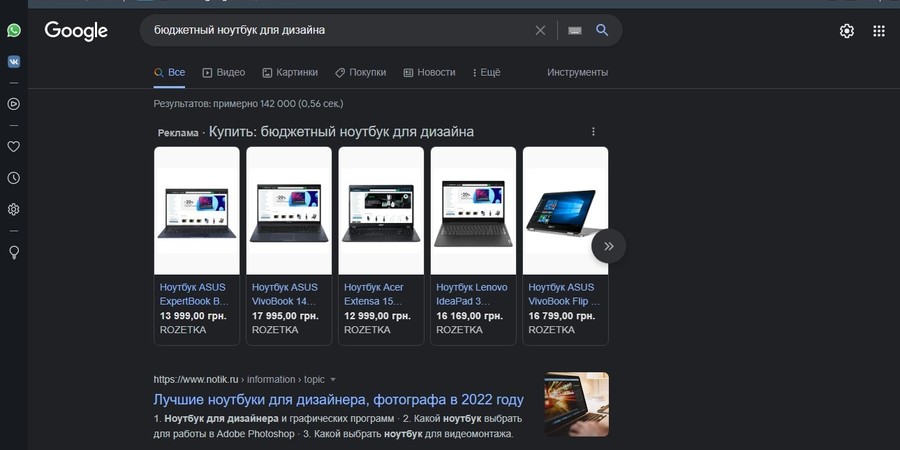
After replacing ‘budget’ with ‘cheap’, the output becomes like this:
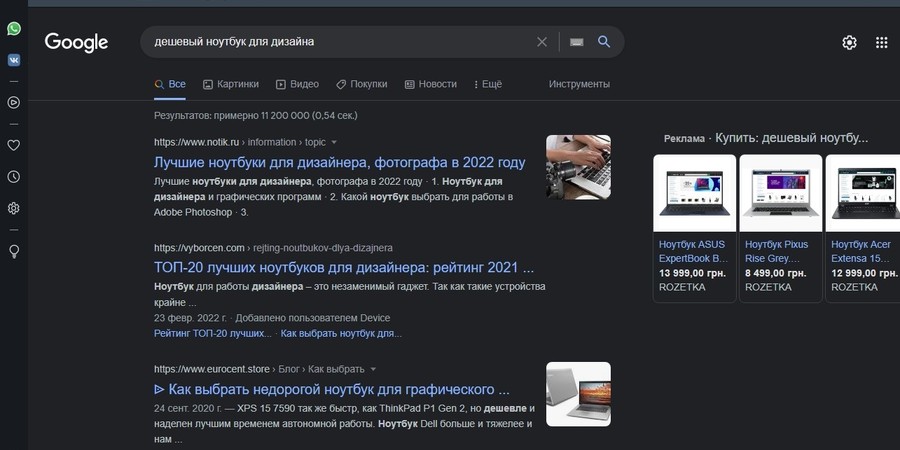
It should be understood that the main role in this search is played by the word ‘laptop,’ as it is the basis of the request’s intent.
Thus, the considered tools allow us to understand that LT queries are relevant. And modern search engine algorithms provide a significant leverage of influence for long-tail queries.
Benefits of long-tail queries
In addition to the LT advantages we have already examined, several more can be highlighted:
High conversion rate
One of the most important metrics in marketing is the sales funnel, consisting of the following stages:
- awareness – the user just learns about our company, our products, and navigates to the site;
- interest – the user studies the offer: browses the product gallery, information about delivery, payment, exchange, and returns;
- desire – the user adds the selected product to the cart;
- action – the user leaves an application/makes a purchase/calls the contact number.
The formulation of a more specific user query gives the understanding that they are aimed at making a purchase and allows significantly shortening the path to sale by removing the first two stages of the sales funnel.
Example of a typical abstract query:
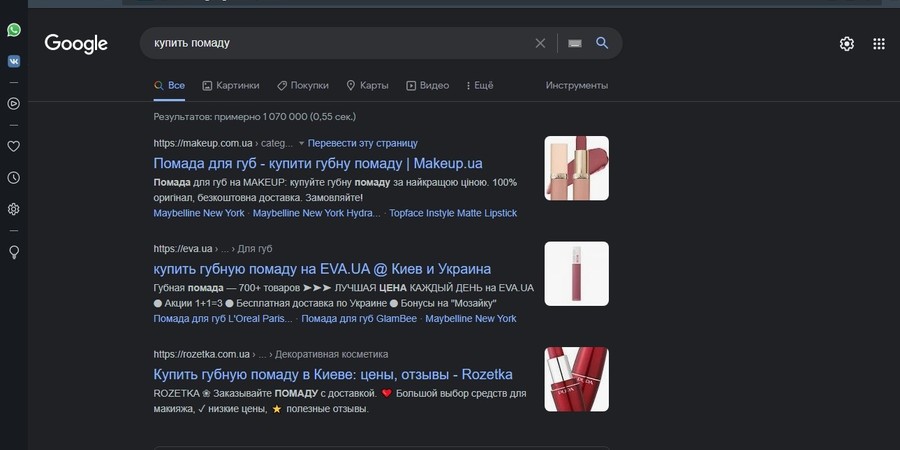
Example of a specific targeted query:
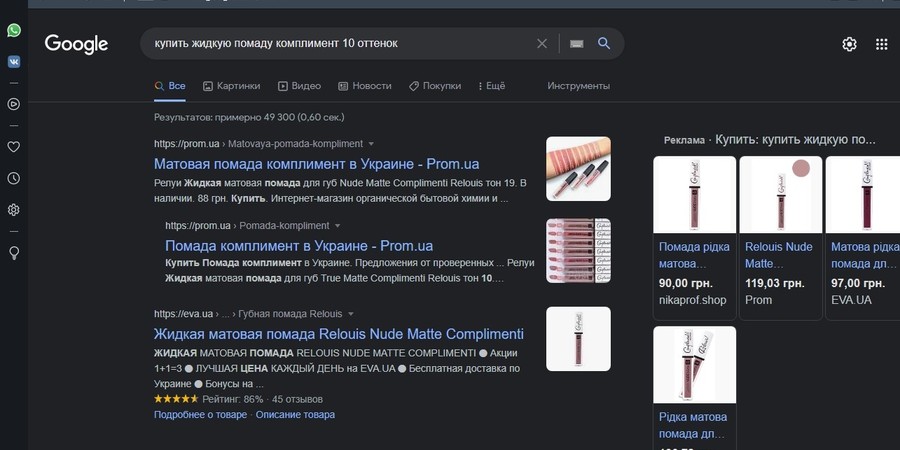
Thus, long-tail enables direct work with potential buyers and significantly shortens the time and stages of sales.
Low competition level
Currently, SEO specialists still prefer site promotion through high-frequency keywords. Therefore, in some cases, a more detailed search will contain fewer results than usual. This implies that using low-frequency queries, which are not burdened by a large number of competitors, can quickly bring your page to the top.
It’s worth remembering that low-frequency keys can coexist with medium and high customer demand levels. Therefore, when choosing this promotion level, it’s necessary to constantly monitor the number of competitors and changes in search output.
General thematic keys
To fully understand this advantage, you need to return to the above-listed categories of long-tail keywords and focus on supplementary LTs. Search engine algorithms are so advanced that they recognize the theme of queries and simultaneously select similar keys related to one intent.
However, there is another side: with the help of low-frequency LTs, with the competent work of an SEO specialist, a site can rise higher even for high-frequency keys.
Where and how to find long-tail queries?
If this initial phase poses challenges for you, below you will find several solutions to this problem.
Hints in the search engine itself
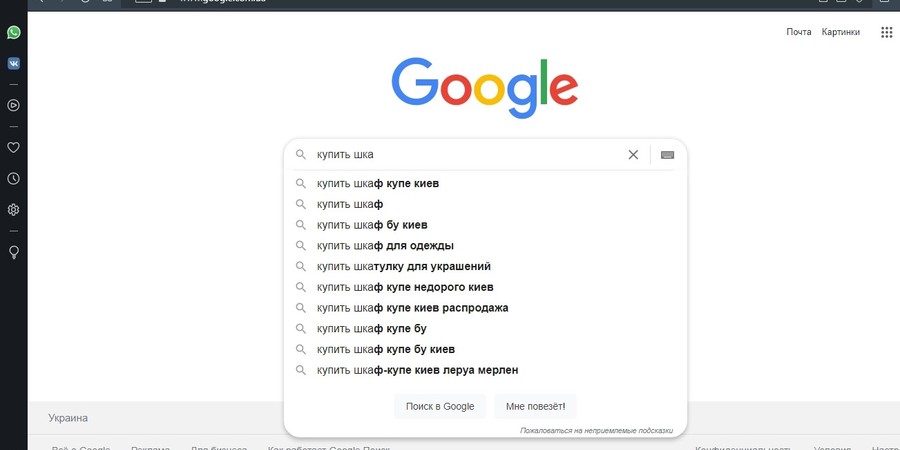
This is one of the simplest yet effective ways to find LT keys. Simply start entering your query in the search line, and the system will provide suitable options. The rule here is: the longer the phrase you input, the more low-frequency the query you get.
Google search engine example:
Related queries
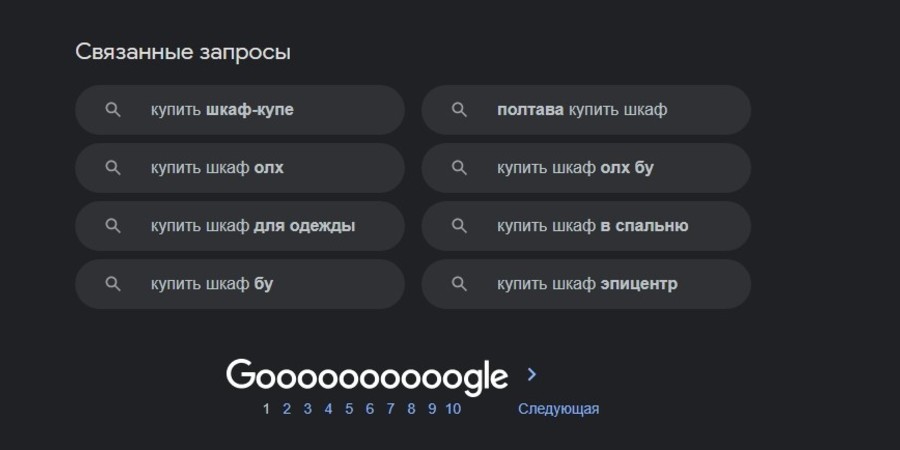
Do not neglect entire blocks of suggested related queries as they are truly useful. More importantly, this method has one crucial advantage: all these searches are real for users.
Google Search Console
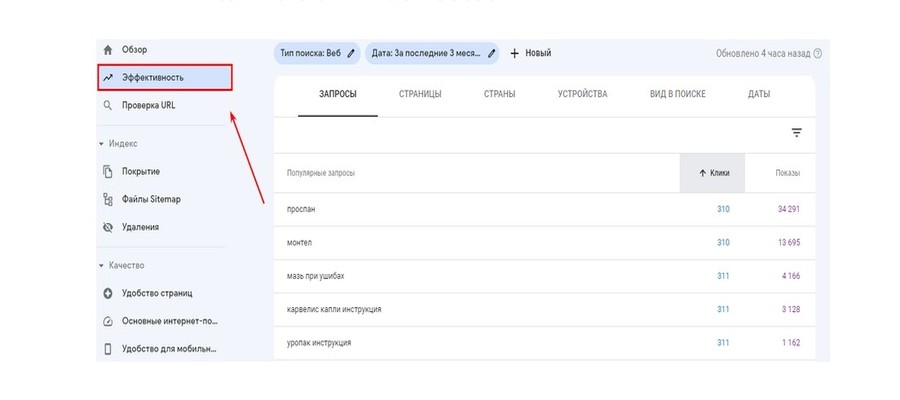
This web service is created specifically for specialists who want to receive information on how their site is represented in the search results of the system and work on it. It’s recommended to export lists from the ‘Effectiveness’ tab, containing the keywords (most of which are low-frequency) by which the selected site is already ranked.
Serpstat
This is a paid tool containing a very rich database of long-tail keywords. Serpstat helps find suitable queries and sort them by required frequency.
The ‘Similar Phrases’ section will help expand the search by selecting additional low-frequency keys. ‘Search Suggestions’ allow obtaining the most natural queries directly inherent in spoken language. With ‘Search Questions,’ you can easily collect informational topics based on your topic.
Ahrefs
This is another paid tool, functionally similar to Serpstat. Several utilities will significantly ease the task and make it more effective. For example, with Ahrefs, you can filter queries by maximum and minimum frequencies. You can also view top pages for the selected query and get the main key.
This tool is excellent for English-language searches, so you can safely use it when working for the American or European market.
How to promote through long-tail queries
Choosing the further promotion strategy is the second most crucial step after collecting suitable keys. To select the most effective option, you need to understand how the search system works with query output results and how it perceives intent.
Promotion by thematic LT
The search engine provides results for thematic queries that directly answer the user’s question.
Google search output example:
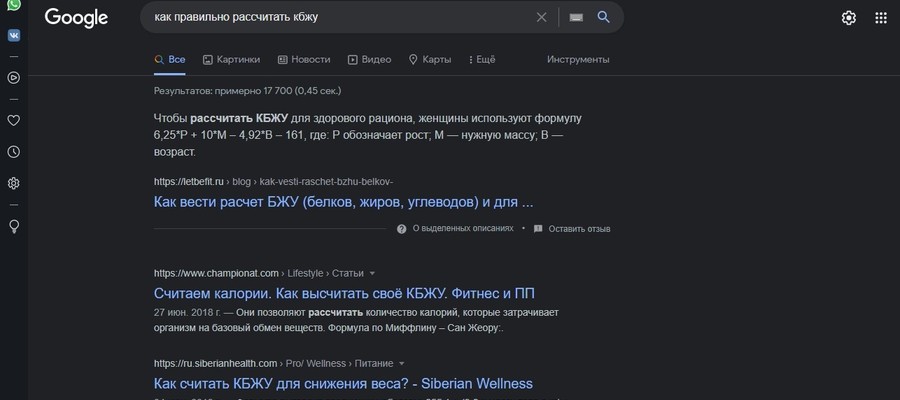
As we can see, the search results consist of pages fitting our clear query. Therefore, in this case, the optimal solution is to create a separate page and promote it under thematic long-tail or semantic query groups.
Further, you can choose your promotion option:
- create a page with a narrow focus and promote it separately;
- create a page containing more generalized information and promote it using several keys at once;
- create a separate section on the site with questions and precise answers, promoting each page with an answer separately for specific keywords.
Thus, you can gather more traffic using low-frequency queries, which will also be more targeted. The main thing is that the output for your query is not highly competitive.
Promotion by supplementary LT
The output for supplementary long-tail queries will display pages promoted by high-frequency queries. In this case, there is no need to create separate pages for each query, as search engines will perceive them as part of another, broader topic.
Consequently, it is better to use supplementary keys as auxiliary. The best option is to focus on the main keys and create additional blocks for supplementary LT key phrases.
Promotion by mixed LT
The output for a mixed long-tail query will contain results with both a maximally specific answer for the user’s search and pages on broader topics. With this strategy, you can promote both thematic and supplementary queries. It’s also important to pay special attention to content and technical optimization.
In conclusion
Long-tail queries are low-frequency but precisely express user requests. They can be:
- Thematic (indicating a specific query, characterized by intent accuracy and detailing);
- Supplementary (suitable for broader topics, as they complement them);
- Mixed (related to both narrow and broader themes).
You can find LT queries in:
- the search engine itself;
- Serpstat;
- Ahrefs;
- Google Search Console;
- Long Tail Pro.
Long-tail queries are quite a powerful tool for SEO promotion, but before starting to work with them, be sure to thoroughly study all the nuances that might affect optimization effectiveness. A competent strategy choice, constant content improvement on the site, and monitoring how selected keys are perceived by search engines can positively impact traffic and attract targeted users.