What is SEO Website Promotion?



Contents:
What is SEO Website Promotion?
What is SEO?
Successful SEO Promotion Today
How and Why SEO Appeared
The Beginning of the Era of Links
The Rise of Machine Learning
The Beginning of an Unlinked Era
SEO of Our Time
Types
Internal Website Optimization
External Website Optimization
What Methods Are Used for SEO Optimization
Basic Techniques for SEO Optimization
As a Conclusion
The topic of SEO promotion will be equally relevant for website owners and their administrators as long as the internet exists. Today we will explain what SEO is and also touch upon the types of website promotions and optimization methods.
What is SEO?
The term SEO stands for “Search Engine Optimization” (website optimization for search engines). Essentially, SEO is a set of different methods and actions aimed at increasing the importance of a website for major search engines (primarily Google and Yandex). The more authority your site has within search engines, the greater its target traffic will be.
In simpler terms, SEO is a set of tasks whose competent execution increases the likelihood of your website appearing on the first pages (TOP-10) for certain searches. This ensures the maximum number of visitors.
The internet space is continually evolving and expanding, so today it is already insufficient to perform a certain set of actions according to instructions to ensure effective SEO promotion for your site. Today, SEO is constant, diligent work on your site.
Successful SEO promotion today – matching your site to the following parameters.
Parameter №1. Quality content.
The textual information on each page must be well-prepared, have almost 100% uniqueness, be complemented with quality thematic images, videos, and fully meet user queries.
Parameter №2. Thought-out structure and appearance.
The site should have a thoroughly developed structure and content and be maximally convenient for your visitors. So that everyone can easily find exactly what they (personally) came to you for.
Parameter №3. Full compliance with commercial factors.
If your internet resource has a commercial nature, it is mandatory for it to have:
- simple and intuitively clear product filtering (if applicable);
- a user account and shopping cart (if applicable);
- a simple and intuitively clear quick order form;
- all contact phone numbers (preferably easily memorable and with operators that exist in the country/region);
- all possible alternative contact methods (Telegram, Viber, Skype, etc.);
- other contacts (physical address with postal code, etc.);
- an online chat;
- other elements that may be useful to visitors and users.
Parameter №4. Recognizability of your brand and constantly growing link mass.
Here everything is clear. The more people know about you, the more they will talk about you. In relation to search engines, the principle is the same – the more and longer you are known, the more external links to your site you will receive. This parameter can also be influenced by promoting your site with articles with the help of PrFlare.
Parameter №5. Loading speed of your internet resource.
Given the constantly increasing popularity of various gadgets and steady growth of mobile internet, the loading speed of your site and its accessibility from smartphones and other mobile devices becomes very important. It is crucial that your site is optimized (codes, scripts) to accelerate its load speed.
Parameter №6. Maximum compliance with behavioral factors.
Right now, behavioral factors receive the most attention during ranking. In brief, for each search engine these factors are the main indicator of the quality of an internet resource.
Successful SEO promotion of a site is determined by such parameters as:
- the amount of time each user spends on its pages;
- depth of page views;
- number and reasons for exits (visitor departures from the site);
- Dwell-time (time of visitors staying on the site)
- and much, much more.
The techniques of search promotion are constantly improving and changing. What worked before may not be useful to you tomorrow (and vice versa). We offer you a brief excursion into the history of the emergence and development of SEO so that it will be easier for you to understand the principles of promotion.
How and Why SEO Appeared
Immediately after the appearance of the first search engine in the 90s and the subsequent rapid development of search engines, it became clear that a detailed study of search algorithms was necessary. Only a clear understanding of search principles can ensure significant internet traffic to your site and help to steadily expand your client base.
At the same time, the term “Search Engine Optimization” appears and a separate profession, “SEO Specialist,” emerges. These specialists began to engage in SEO-promotion of internet resources at a professional level. At that time, it was not complicated – it was sufficient to simply fill text materials with keywords, and the site would undoubtedly occupy high positions in the search. However, the results of the search itself were often just horrendous and could not satisfy neither the users nor the search engines themselves.
The Beginning of the Era of Links
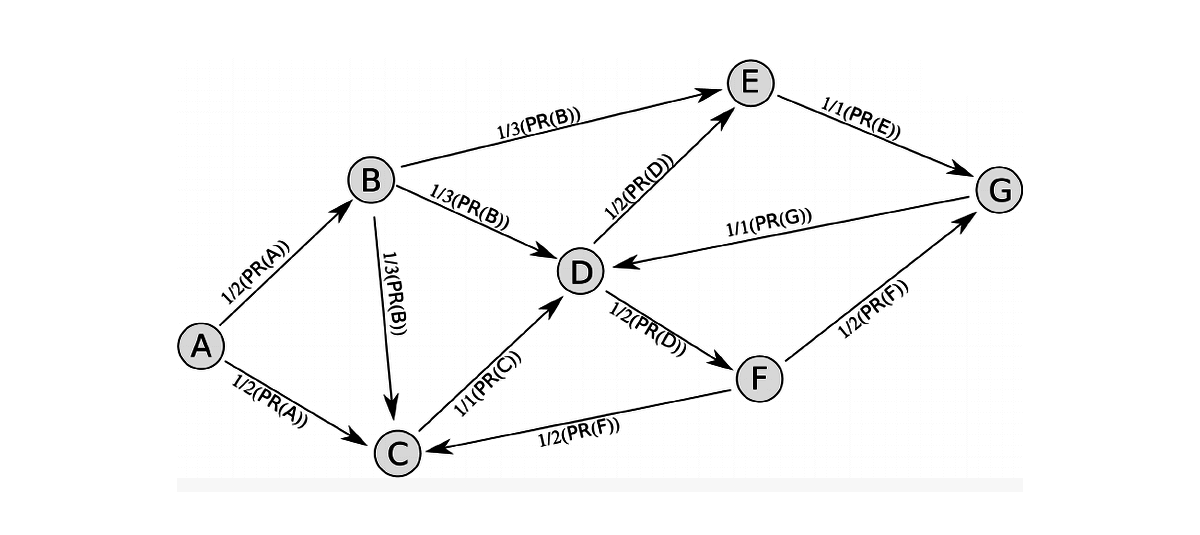
The era began in 1998 with the advent of the revolutionary Google PageRank algorithm, which once and for all changed the field of ranking. The following year, another algorithm appeared – Yandex TIC. Both PageRank and TIC were very similar, and they based their ranking of sites directly on their link mass. Each domain and its pages received their personal link weight, which depended solely on the quality and the total number of links they possessed. This link weight was then passed on to each outgoing link from the domain.
At the same time, the SEO industry began to grow, becoming a full-fledged separate business. SEO optimizers literally started “mass-producing” special sites where it became possible to buy links, and all this resulted in total disorder and spam within the ranking system itself, as separate factors.
The Rise of Machine Learning
This era of Runet began in 2009 and was marked by the release of a search robots learning algorithm called Yandex MatrixNet. This algorithm could independently create ranking formulas. In fact, MatrixNet was a new unique Yandex system for ranking search queries, which differed fundamentally from the systems of other search engines.
The essence of this system was not in referring to the pages of Internet resources caught in search, but it was based on their index or on referring to a separate special Yandex database. As a result, users who entered their search queries saw only those pages of sites that were included in this special database.
The Beginning of an Unlinked Era or Era of Low-Quality Links Ended
This era began in 2012 during the fierce battle of search engines against uncontrolled link spam. This era was marked by the introduction of Google’s new algorithm, Penguin. In 2014, Yandex made a loud announcement about the final and irrevocable cessation of link influence on its ranking formulas. And in 2015, another new algorithm appeared – Yandex’s special filter “Minusinsk.” This filter identified internet resources using SEO links for their search promotions (more precisely, sites that had a lot of anchor backlinks) and punished them for this “link spam” with special sanctions in the form of ranking restrictions up to 6 months (inclusive). This significantly reduced such sites’ internet traffic.
SEO of Our Time
Ten years after the unlinked era, optimizers began to realize that the ranking rules had undergone significant changes. And indeed, today there are over 800 different factors that have their personal impact on ranking algorithms. The only way to promote your internet resource into the much-desired TOP-10 in the issues is regular, complex, and systematic work on it.
What is SEO Promotion and What Types Does It Come In
As mentioned above, SEO promotion involves a whole systematic set of different methods and actions (from filling a site with quality content to building up its link mass).
All such work can be conditionally divided into two types:
- Internal site optimization.
- External site optimization.
Internal Website Optimization
It includes a whole complex of actions and measures applied directly to the site itself, not to external resources.
It includes 9 main stages:
- Working on the semantic core (its composition).
- Development of special files robots.txt and sitemap.xml.
- Site monitoring for technical errors and their correction.
- “On-page optimization” of the site (preparation of unique texts, development of title and meta tags).
- Optimization of the structure of the internet resource and its external appearance.
- Optimization of video, photos, and other images on the site.
- Site relinking tasks (connecting its pages with hyperlinks).
- Maximum accounting for commercial factors.
- Maximum consideration of behavioral factors.
It is important to note that all these 9 parameters should be regularly tracked and promptly corrected for any errors. Therefore, any experienced SEO specialist creates special “check-lists” (control lists) for themselves and conducts regular site checks according to them. It is important to understand that any missed error can be very important and can collapse all your internet traffic.
External Website Optimization
It involves activities that you should conduct on third-party internet resources. They usually involve work on increasing the recognizability of your brand and building up the link mass to your site.
For proper building up of quality link mass, it requires:
- Preparation of relevant and interesting articles for users with maximum uniqueness and their publication on the most authoritative internet resources.
- Preparation of relevant press releases of your company and their subsequent publication in the media and thematic internet resources.
- Regular posting of relevant posts on suitable resources.
- Active work with internet media and their journalists.
- Increasing the recognizability of your brand name in the internet network (active link placement is usually not required for this).
What Methods Are Used for SEO Optimization
Any business can be conducted in a variety of different methods. Moreover, some of them are not always legal (legitimate), and sometimes even outright prohibited. SEO is no exception here.
Basic Techniques for SEO Optimization:
Legal (white) optimization.
This method, as you understand, is completely legal and includes working to improve the quality of an internet resource using all the parameters mentioned in the article above. Although this work is extremely large and meticulous and requires a vast mass of knowledge from you, you are guaranteed to get excellent results.
Semi-legal (gray) optimization.
These methods, though forbidden in search engines, give good results. One such method is outreach links.
Illegal (black) optimization.
Also called “Black-hat SEO,” it uses completely prohibited methods in search engines. If these are abused, your internet resource risks being not only exposed to filters for a long time but also being banned altogether. The brightest example of such methods is doorways.
As a Conclusion
Today we have tried to inform you in detail and accessibly about SEO optimization of internet resources and its importance for promoting your site. However, it is simply impossible to answer all questions. We have already covered part of them in our three previous articles, and we will try to detail the rest in upcoming ones. For this reason, we advise you to subscribe to our updates and feel free to ask emerging questions in the comments. Every question of yours is important to us and may become the base for our next articles.